
Keynote: Prof. Vijay Janapa Reddi, Harvard
Title: Architecture 2.0: Foundations for AI Agents in Computer System Design
Abstract: AI agents now write RTL, tune kernels, and place macros. Billions of dollars are riding on the promise that they will soon design chips. But the hardest part of building a computer was never writing the design. It is deciding what to build, determining whether it works, and knowing when the result can be trusted.
Architecture 1.0 was built around human architects. We developed languages, simulators, tools, and methodologies to help people explore designs, reason about tradeoffs, and make decisions. Architecture 2.0 asks a different question: what happens when agents themselves become architects? An AI architect is not a better model. It needs an entire design loop, and much of what that loop requires does not yet exist: the data, benchmarks, baselines, verification methods, and evaluation frameworks needed to establish meaningful progress. Agents that look capable with a simulator in the loop fall below their starting point without one.
But should we simply automate the design process we already have? We built that process for human minds. Agents may not need all of it. What should we preserve, what should we rethink, and how does the role of the human architect evolve when agents begin making architectural decisions? What will it take to build a computer that an agent can design and a human can confidently sign off on?
Architecture 2.0 is about more than building better agents. It is about rethinking how computers are designed, how humans and agents work together, and what foundations will make that collaboration possible. This is a research agenda for the entire computer architecture community, and one we have the opportunity to shape together, with the students who will see it differently than we do.
Speaker
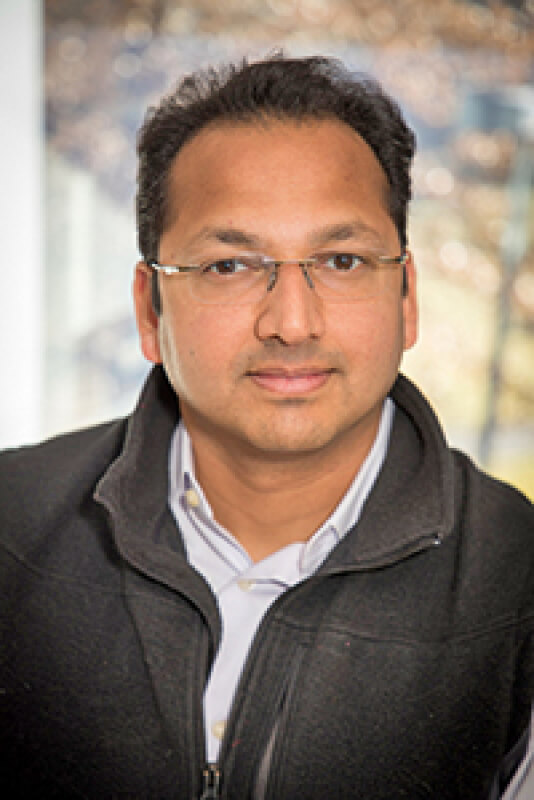
Bio: Vijay Janapa Reddi is the Gordon McKay Professor of Electrical and Computer Engineering at Harvard University and a Visiting Professor at ETH Zürich. His research spans computer architecture, machine learning systems, and AI agents for computer system design. His work has been recognized with numerous awards, including best paper awards at MICRO, HPCA, and DAC, multiple IEEE Micro Top Picks, and induction into the MICRO and HPCA Halls of Fame. He is a co-founder and Vice President of MLCommons, where he co-led the development of MLPerf, the industry-standard benchmark for machine learning systems. He leads the Architecture 2.0 effort, is the author and editor of the Machine Learning Systems textbook (mlsysbook.ai), and is actively working on an upcoming synthesis lecture on Architecture 2.0 (arch2.mlsysbook.ai).